
Buying Spices in Bulk: A Specification Checklist
A spice name is the beginning of a purchase brief. Format, grade, intended use and packaging turn it into something a wholesaler or food business can evaluate.
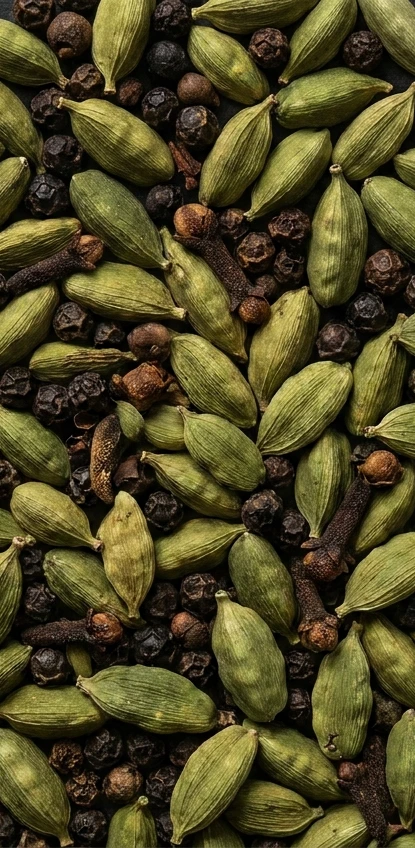
Explain how the spice will be used
Start with the intended application: whole-spice resale, retail repacking, food preparation or further processing. Then name the exact format required. A request for whole peppercorns should be distinguished from a request for processed pepper; fresh ginger should be distinguished from any processed ginger format.
This first decision makes the remaining questions more useful. It tells the supplier which characteristics to discuss and helps prevent a photograph, a generic grade name or a familiar local term from standing in for a complete specification.
Ask different questions for different spices
| Product | Describe in your inquiry |
|---|---|
| Black pepper | Required origin, grade, density, moisture and whole or processed format. |
| Green cardamom | Pod size, colour, grade, origin and moisture requirements. |
| Cloves | Whole-clove grade, origin, moisture and acceptance criteria for your application. |
| Ginger | Fresh or exact processed format, grade, origin and handling requirements. |
These fields describe what to ask about. They are not universal quality limits. Record the values your business needs and ask the supplier to confirm which requirements the proposed supply can meet.
Separate appearance, origin and testing
A visually appealing spice is not a complete quality assessment. If a particular origin matters, request confirmation for the proposed supply. If a physical, chemical or microbiological parameter matters to your purchase, name it in the brief and discuss how it will be checked.
The Spices Board’s guidance distinguishes different kinds of analytical testing and sample handling. The practical lesson for a buyer is to specify the relevant testing requirement and agree the evidence before purchase, rather than asking for an unspecified “quality certificate”.
If a test report is supplied, check the product and lot it identifies, the tests covered and the reporting date. Ask which proposed supply it relates to. A report’s existence alone does not explain whether it answers your purchase requirement.
Write a packing brief alongside the spice brief
Tell the supplier your total order quantity, preferred pack size and whether you plan to sell the product in that pack or repack it. Include any label language, branding or handling requirement that needs to be discussed. Ask what is included in the offered packing arrangement.
For ginger, make sure the packaging discussion matches the requested product format. For every spice, separate your desired arrangement from what the supplier has actually confirmed. That keeps the quotation useful without making assumptions about available pack sizes or services.
Give the destination country, not just the region
Whether you buy for the Middle East, Africa, Europe or the Americas, identify the actual country, delivery location and intended use. Your importer can then establish which destination-specific requirements must be addressed. A single statement such as “export quality” cannot replace those details.
Use one written specification when comparing offers. List any alternatives separately, and record which points remain open. This gives the next discussion a clear purpose: resolving the specific differences in format, quality, packaging or commercial terms.
See our product information for Malabar black pepper, green cardamom, cloves and ginger. Supply details are confirmed through inquiry.