
How to Request a Wholesale Rice, Spices or Coffee Quotation
A clear request helps both sides discover whether a proposed supply fits. Here is a reusable way to brief a supplier and compare the answers without losing important details.
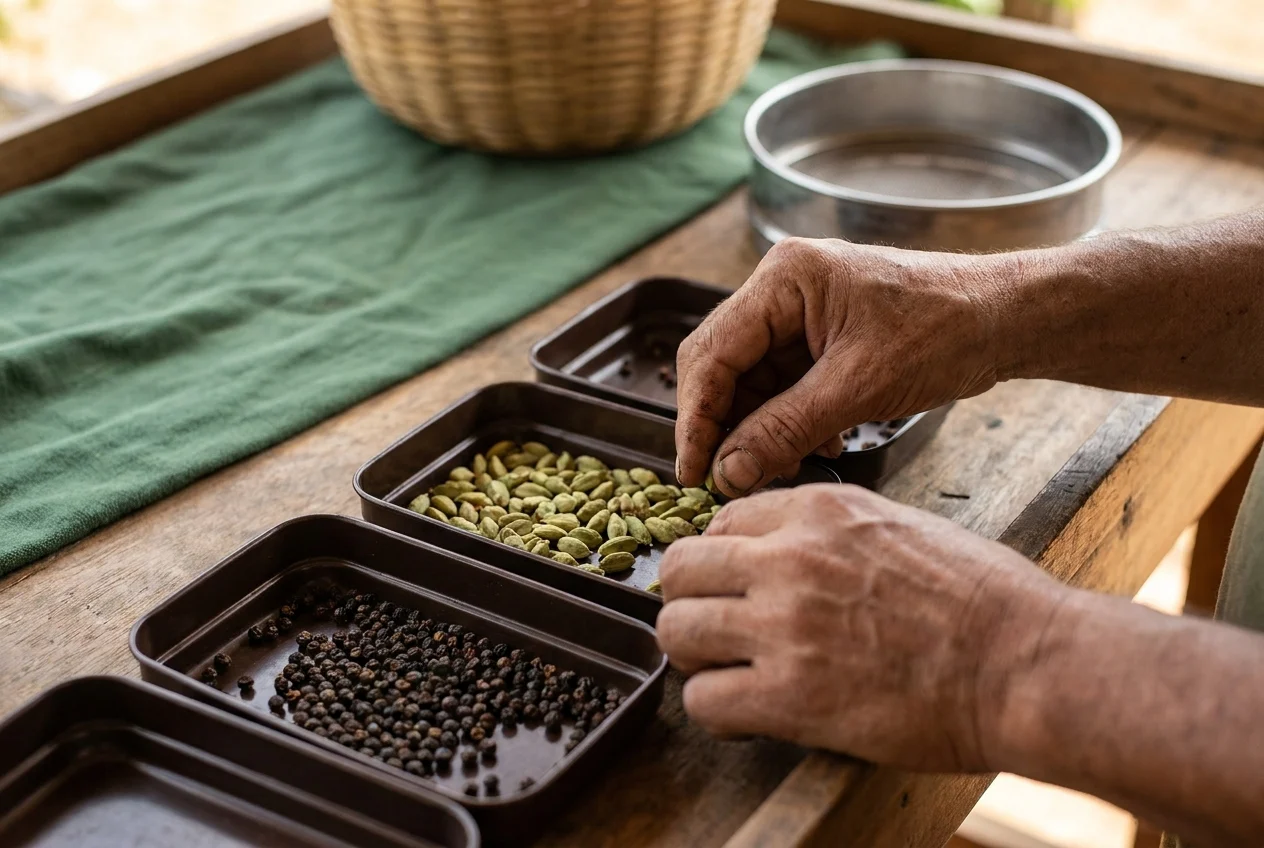
Name the product and its intended use
Start with the product, required format and intended commercial application. “Rice for retail distribution”, “whole pepper for repacking” and “coffee powder for food service” give a supplier different starting points. If your request includes several products, list them separately so each has its own quantity and specification.
Attach an existing specification if your business already uses one. If you are exploring options, explain which requirements are fixed and which are open for discussion. This is more useful than requesting the “best price” before the product itself has been defined.
Separate fixed requirements from preferences
Identify the details that determine whether an offer is suitable. For rice, that might include variety, grain length, broken percentage and moisture. For spices, specify the product format, grade, origin or other quality parameters relevant to your use. For coffee, include the required format, blend and relevant roast or grind details.
Label preferences as preferences. A supplier may be able to discuss an alternative, but an alternative should be identified clearly in the response. Keep a short list of outstanding questions so they can be resolved before an inquiry becomes an order.
Specify quantities and packing together
Provide both the total volume and the required size of each pack. If you need multiple bag or pack sizes, show the quantity for each. Include any labelling, branding or handling requirements that could change the proposed arrangement.
When requesting prices from several businesses, send the same brief. A quotation for a different product format, quantity or pack size is a different offer, even if its headline price appears lower. Ask the supplier to explain any differences rather than trying to infer them from a short message.
Make the destination and timing specific
The Middle East, Africa, Europe and the Americas are useful market descriptions, but each includes many different delivery locations. Name the country and location relevant to the quotation, together with your required timing. Your importer or logistics provider can establish which destination-specific arrangements need to be addressed.
Ask what the quotation covers: product and packing, the agreed delivery basis, any included services and the period for which the offer is valid. Record which items are confirmed and which still require discussion. A shared understanding of the quotation is more valuable than an assumption about a familiar trade phrase.
A wholesale inquiry template
Product and format: [product, variety or format]
Intended use: [resale, repacking, food service or processing]
Required specification: [grade, quality parameters and any reference document]
Quantity and packs: [total amount, quantity per pack and label needs]
Destination: [country and delivery location]
Timing: [required date or preferred schedule]
Open questions: [availability, samples, alternatives or other points to confirm]
Replace the brackets with your own requirements; the template does not suggest that every grade, service or delivery arrangement is available. Keep a copy of the brief with the supplier’s response so later changes remain easy to follow.
Turn the response into a clear next step
Check that the response addresses your specification, quantities, packaging and destination. Ask about any missing point before treating it as agreed. If a sample or supporting document is proposed, clarify what it will demonstrate and how it relates to the supply under discussion.
For a request covering the asliexim range, explore our rice, spices and coffee products and use the wholesale inquiry form. We can discuss suitable options once your requirements are clear; availability and commercial terms are established for each inquiry.