
Coffee Beans, Powder and Blends: A Wholesale Buyer’s Guide
Choosing coffee for a business starts with the format your customer will use. Beans, powder and blends describe different parts of the brief, and they should be specified separately.
Start with the format and the business application
A roaster, a retailer and a commercial kitchen may all enquire about coffee, but they do not necessarily need the same product. Say whether you require beans or powder, and explain how the coffee will be prepared or sold. If you need beans, state the processing or roast condition you are asking about rather than leaving it implied.
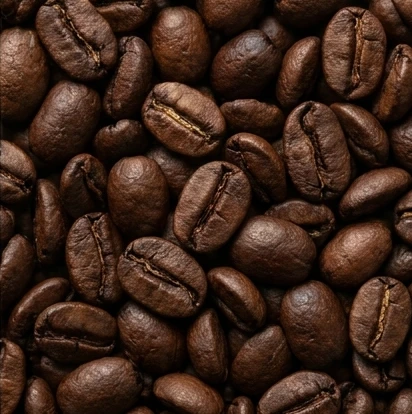
For powder, identify the intended preparation method and any grind requirement your business uses. The phrase “fine coffee” does not, by itself, tell a supplier enough about the required format, blend or packing arrangement. A product photograph is useful context, but it cannot specify those details.
Keep blend composition separate from product format
A blend describes its composition, while beans or powder describe its format. The Coffee Board of India identifies Arabica and Robusta as the two main coffee varieties grown in India. If you have a required composition, record it explicitly in your inquiry instead of assuming a product name determines it.
If you are comparing alternatives, ask what changes between them. Keep the format, roast, grind and pack size constant wherever possible so you can understand what you are evaluating. If you do not yet have a fixed composition, explain your application and the reference product or preparation result you are trying to discuss.
Describe roast and grind where they apply
State your desired roast profile for a roasted-coffee request. For ground coffee, include the intended equipment or preparation method and the grind requirement. These are separate decisions: a roast description should not be used as a substitute for a grind specification, or vice versa.
Where sample evaluation is agreed, record how the sample was prepared. Compare samples using the same method and keep notes on the result. Ask how the accepted sample and written specification will be related to any proposed order, rather than assuming a sample establishes every detail of future supply.
Ask what an origin claim refers to
If origin is important to your business, say whether you need a country, region or a more specific source to be identified. Ask what evidence supports the claim for the proposed product. A country-of-origin statement and a single-origin description are not interchangeable instructions.
The asliexim range includes available commercial blends; single-origin coffee is discussed only where origin can be verified. Naming your requirement early allows that distinction to be resolved before packaging or price discussions progress.
Finish with packaging, quantity and destination
Explain whether you need bulk packs for further handling or a retail format. State the size of each pack, total quantity, any label requirements and the destination country. Buyers in the Middle East, Africa, Europe and the Americas should give the actual delivery location rather than relying on the region alone.
- Beans or powder, with the intended business use.
- Requested composition or blend requirements.
- Relevant roast and grind requirements.
- Any origin requirement and supporting evidence needed.
- Bulk or retail format, quantity and destination.
Explore our wholesale coffee information and send a coffee inquiry with those details. Availability, formats and commercial terms are confirmed for the request.